I’ve always been someone who doodles—margins, notebooks, any blank space within reach. In high school, I even set out to create the world’s longest continuous drawing. It wasn’t just about filling space; it was about seeing how far an idea could go. I eventually moved on, but that instinct—to take something simple and build it into something bigger? Yeah, that one stuck.

Anyway, fast forward to recently—I noticed something weird. These little doodles? They weren’t random. Some looked chaotic, others were kind of cute. Why? Well, turns out, my emotions or thoughts were hijacking my pen. My scribbles were basically mood swings in 2D. I mostly draw characters. I love visualizing my thoughts, like an infographic but with vibes. If I think about a car, I don’t just write “car”—I’ll probably sketch one. And at some point, I started realizing—they all felt like something. Like, they weren’t just faces; they were straight-up thoughts in disguise. And yeah, I know, Pixar already did this whole “emotions as characters” thing with Inside Out. Like, happiness, sadness—sure, but what about the thoughts? I left that idea open in the tabs of my brain and, as with most things in life, I moved on.
And then, I came across this line in a book: “The things you struggle with are your thoughts. You don’t even know what you’re fighting. But if they had a clear shape, a structure, a form—battling them would be easier. So, write them down.”
Or…. you know, turn them into a character. My brain immediately starts going off like a firecracker: Doodles, thoughts, emotions, Inside Out—wait, is that Disney or Pixar? Irrelevant, character design, game, friends , story, clarity , write, draw…. Boom!
Thoughts? They’re like fog—everywhere, unavoidable. But what if we gave that fog a face? A body? A name? Would we actually want to hang out with it? We’re picky about who we call our friends, but when it comes to the thoughts in our heads, we let anything in. This idea hit me at full speed, so I grabbed my notebook and wrote: Imaginary Friends for Adults. I was obsessed. So, naturally—this had to happen.
Of course, I had to start with the most notorious one—Overthinking. Why? Simple. Overthinking is the VIP of brain clutter—it’s the one that shows up uninvited, makes everything more complicated than it needs to be, and somehow always stays way too long. Everyone’s done it, right? And naturally, it needed a name—Milo. Why? Who knows, it just felt right, it just clicked. Now, I had to make him real.
MILO
I started researching—what would he look like? What would he wear? What would he like? What would he hate? Thinking about overthinking became my new favorite pastime (ironic, I know). My first instinct? Well, if Milo was responsible for our brain constantly short-circuiting, why not base him on an actual brain? I sketched a few designs inspired by that. Maybe he’d be a little monster, something like Randall Boggs from Monsters University—sneaky, restless, always there. But it didn’t feel right. It was too… fictional. I knew Milo wasn’t real, and somehow, that made him less effective. I couldn’t take him seriously.
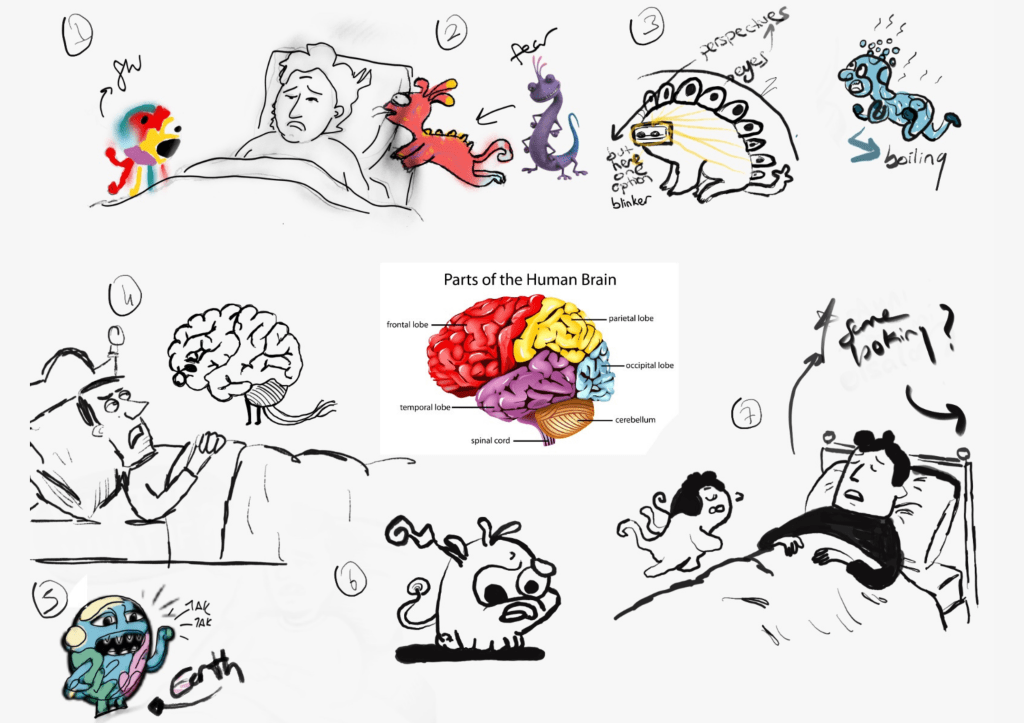
So, what if everyone’s overthinking monster looked different—maybe exaggerated versions of themselves? That idea had potential, but not quite what I was aiming for. I didn’t want everyone’s Milo. I wanted the Milo. First, I had to figure out exactly what he looked like.
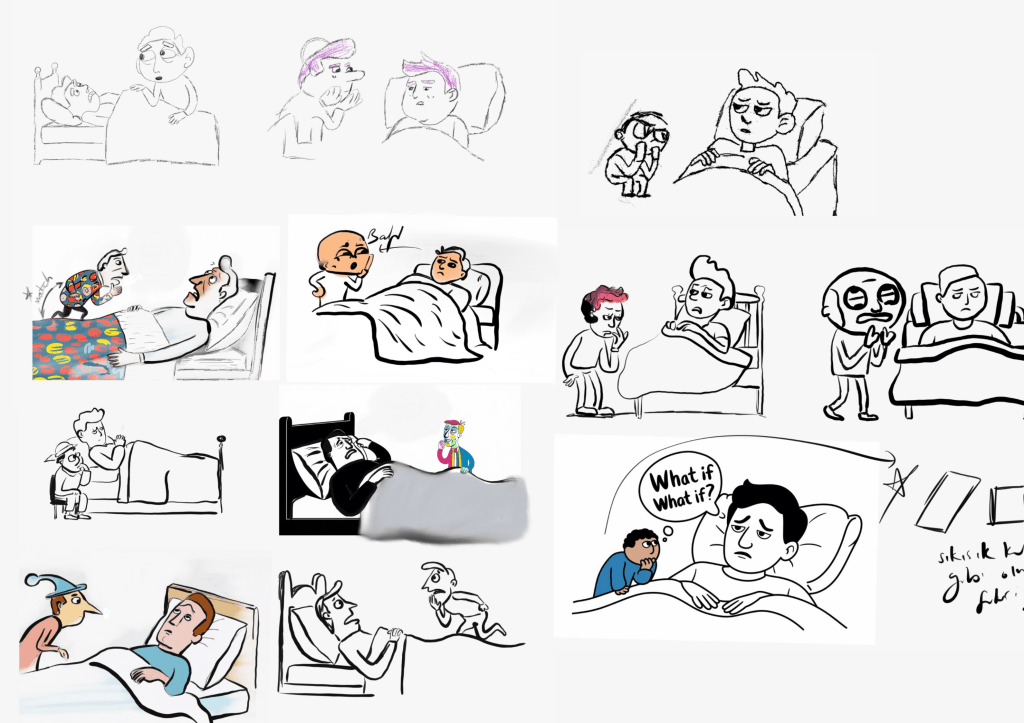
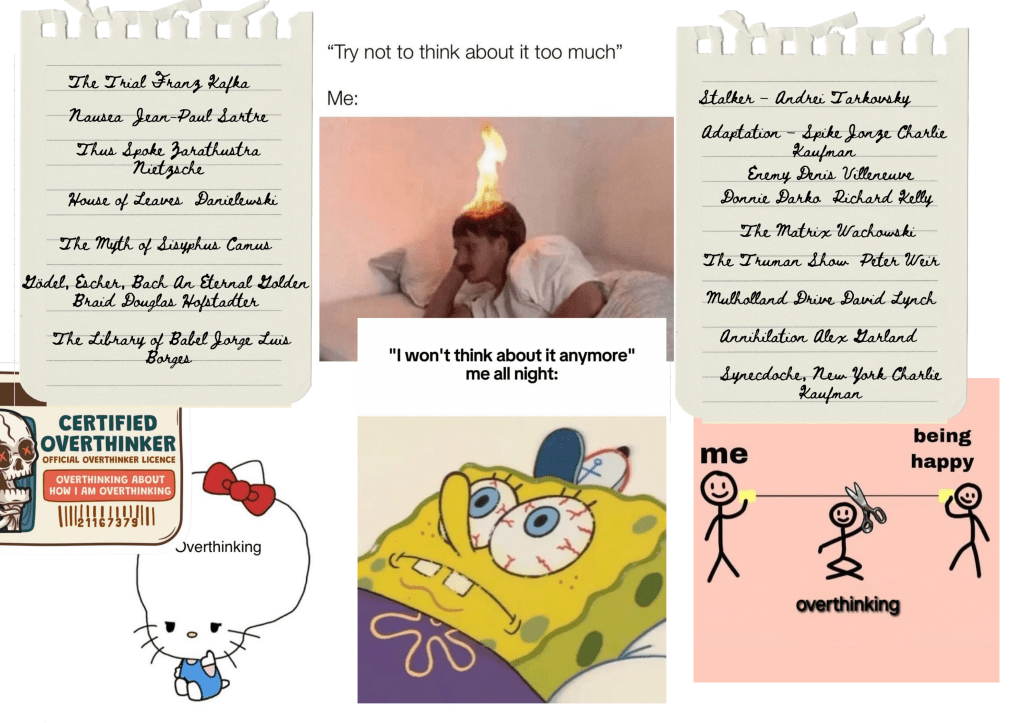
I knew I had to dig deeper. This wasn’t just about slapping a couple of ideas together; this was about finding the essence of overthinking. So, I went to work. I dove into research, looking for anything and everything that could spark an idea—visuals, emotions, symbols. I needed to understand what makes overthinking tick. What triggers it? What does it look like in the chaos of the mind? I started collecting bits and pieces from everywhere: weird brain anatomy diagrams, intense stills from films, even a few abstract art pieces that looked like someone had been overthinking too much.
The next step? The moodboard. A perfect, chaotic, visual representation of everything I needed to pull from. I gathered textures, colors, objects—anything that felt like it belonged to Milo’s world. It wasn’t just random inspiration; it was about setting the tone. I wasn’t just building a character—I was designing the entire mental space where Milo lived. Every detail mattered. Was he sharp and angular? Soft and disorganized? I needed to find the balance, and a moodboard was the best way to explore it without getting lost in the weeds. And, let’s be honest, half of this was me throwing ideas at the wall to see what stuck. Sometimes, the best way to come up with something new is to let your brain wander and mess with a few things until the pieces start to form a picture.
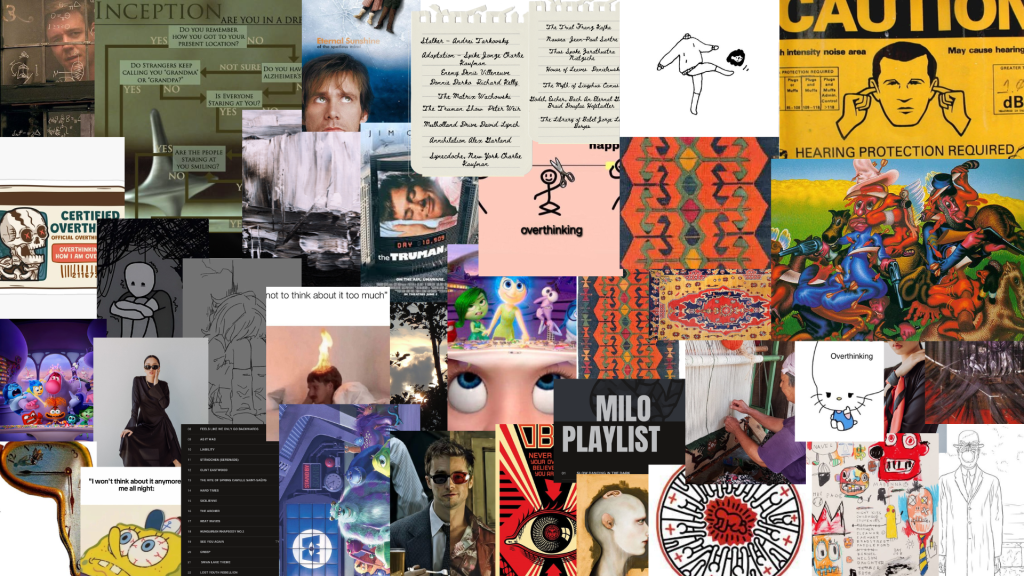

This is exactly how overthinking works: you start with one small idea, and before you know it, you’ve overanalyzed the color palettes of Balkan quilts And Turkish rug. But hey, at least I had my three non-negotiables for Milo. Alright.
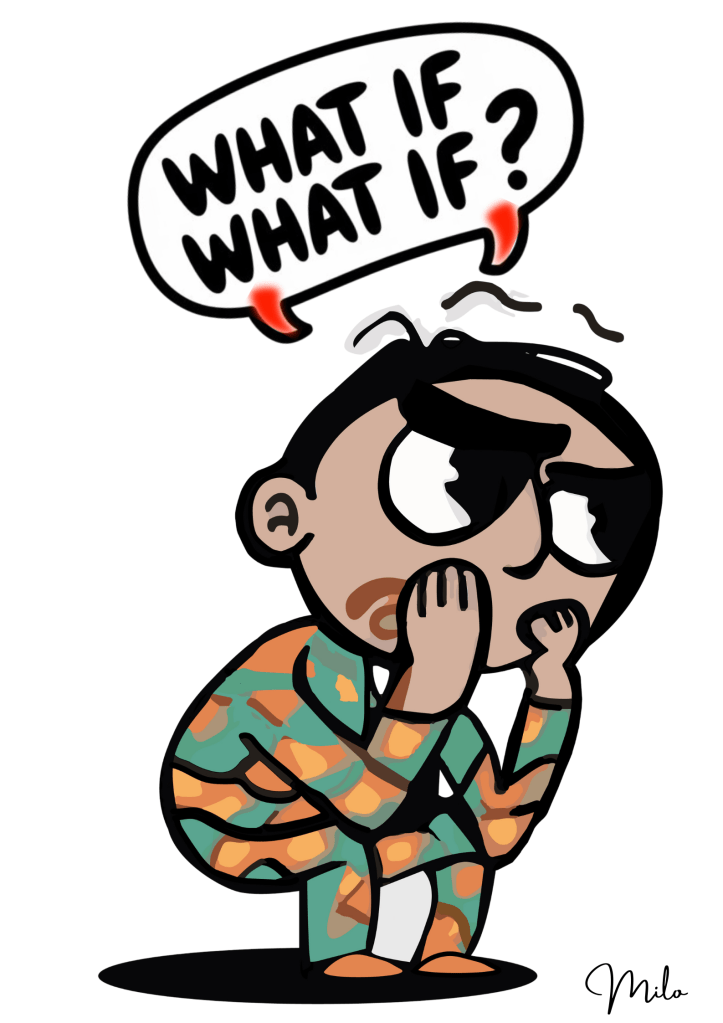
1. The Eyebrows: Thick. Bold. Messy. Like the chaotic scribbles in the margins of my notebooks. They’d carry most of his expression—furrowed in frustration, raised in existential dread, scrunched in a “Did-I-just-say-‘you-too’-to-the-waiter?” kind of way.
2. The Posture. Milo had to look trapped—like he was perpetually squeezing himself into a box that was just a little too small. Overthinking does that to you, right? You cling to an idea, tense every muscle, overanalyze every possibility until you’re emotionally constipated. So, Milo needed to look… well, constipated.
3. The Clothes. At first, I thought muted, dark colors—black, gray, the classic “I’m deep in thought” aesthetic. But then? Boring. So I pivoted. I thought of those vibrant, patchwork quilts or Turkish carpet from old Balkan homes. The kind woven with hidden stories, stitched over and over again—just like an overthinker replaying the same thought a hundred times. And let’s be honest, we’ve all stared at a carpet pattern in a waiting room or at 3 AM, lost in thought. That’s Milo. His clothes had to be colorful, faded, slightly mismatched—ugly, but in a strangely poetic way.
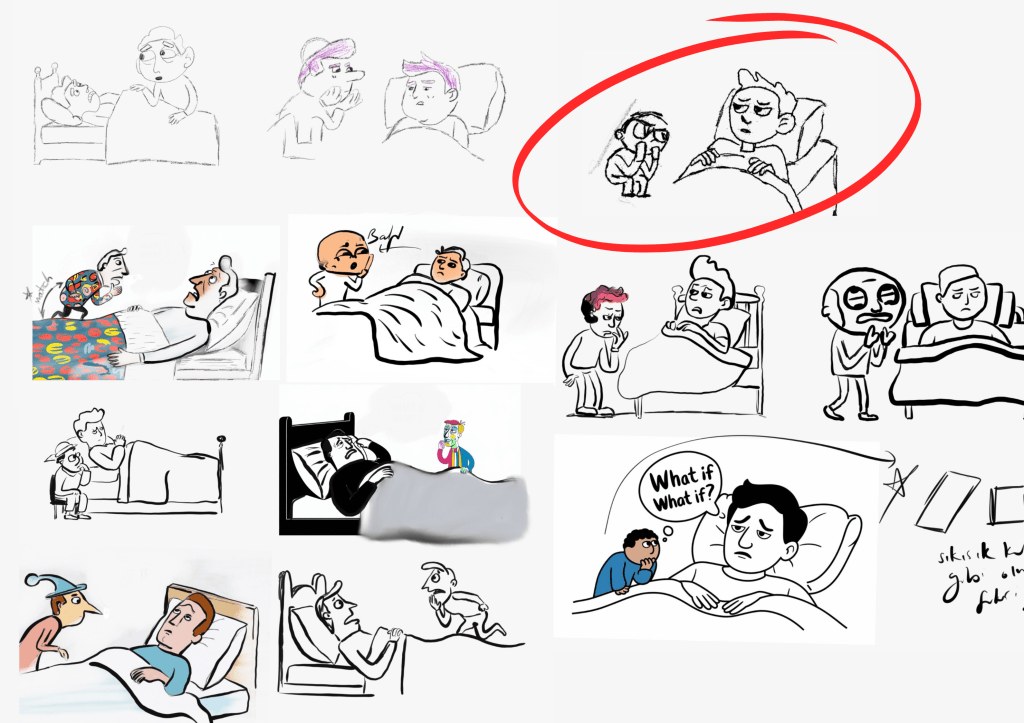
Now that I knew what he looked like, it was time to bring Milo to life. Let’s get sketching. I tried a bunch of different styles.
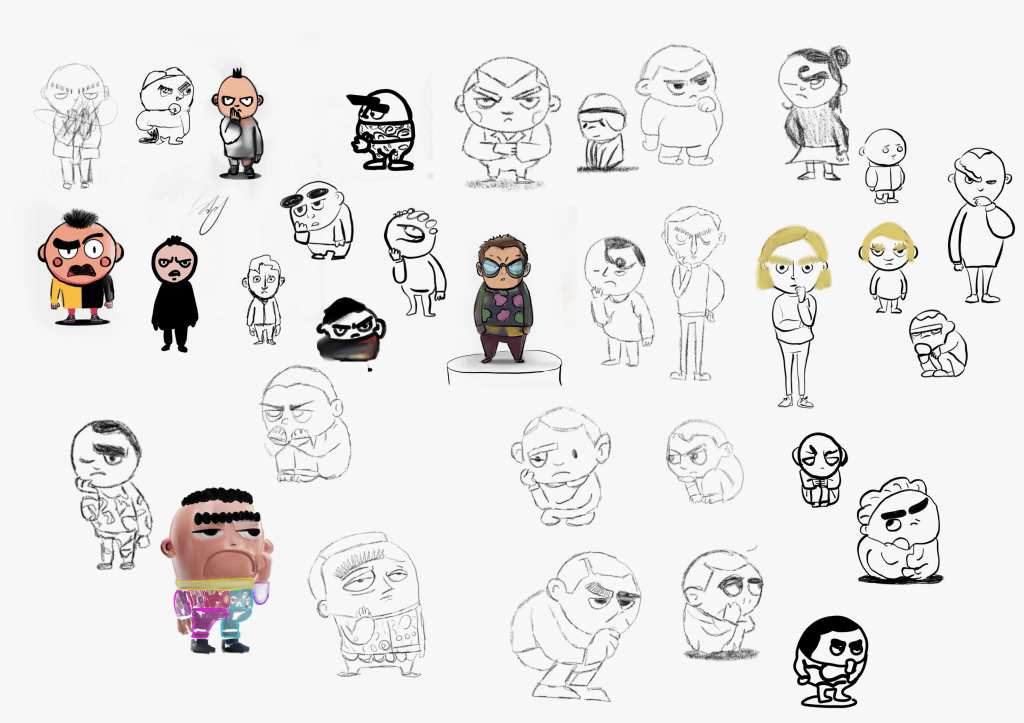
but every single time, my brain kept circling back to this version of Milo. That had to mean something, right?
I even experimented with 3D models. They looked good, objectively speaking. But something about them felt… off? Too polished, too distant. I couldn’t connect. Maybe it’s just me—I love 3D art, but it often feels like it sucks the life out of a concept. Too calculated.
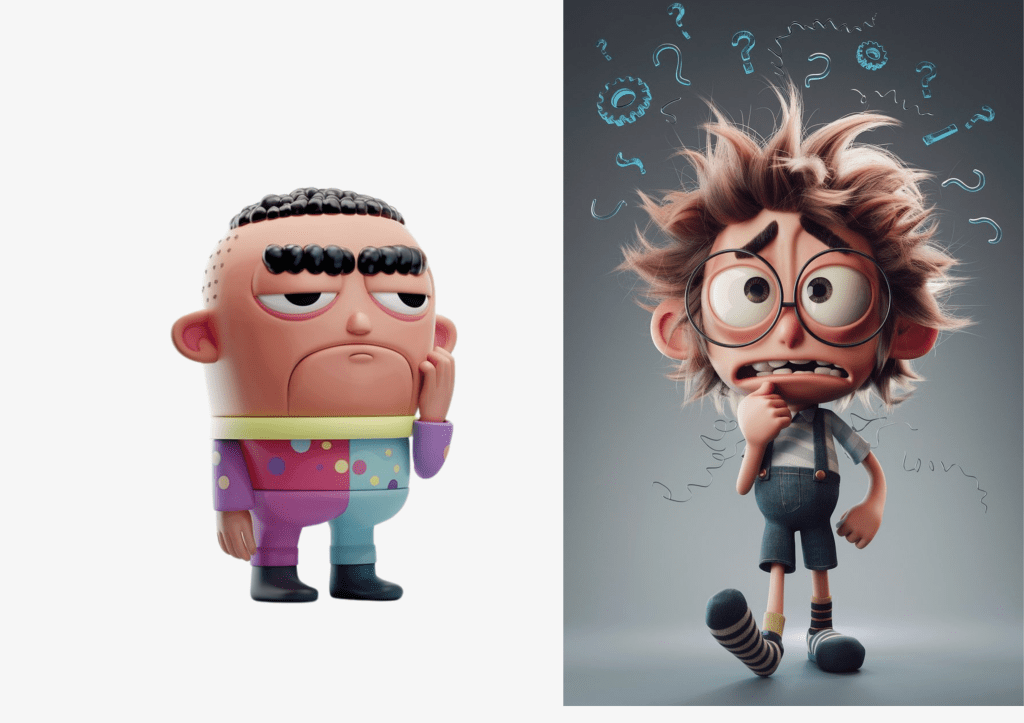
Creativity thrives in the rough edges, in the accidents. When I sketch by hand (or even mess around in Illustrator), there’s room for spontaneity. Room for happy mistakes. Anyway I’m sticking to my weird little scribbles for now. We can debate the 3D modeling another day.
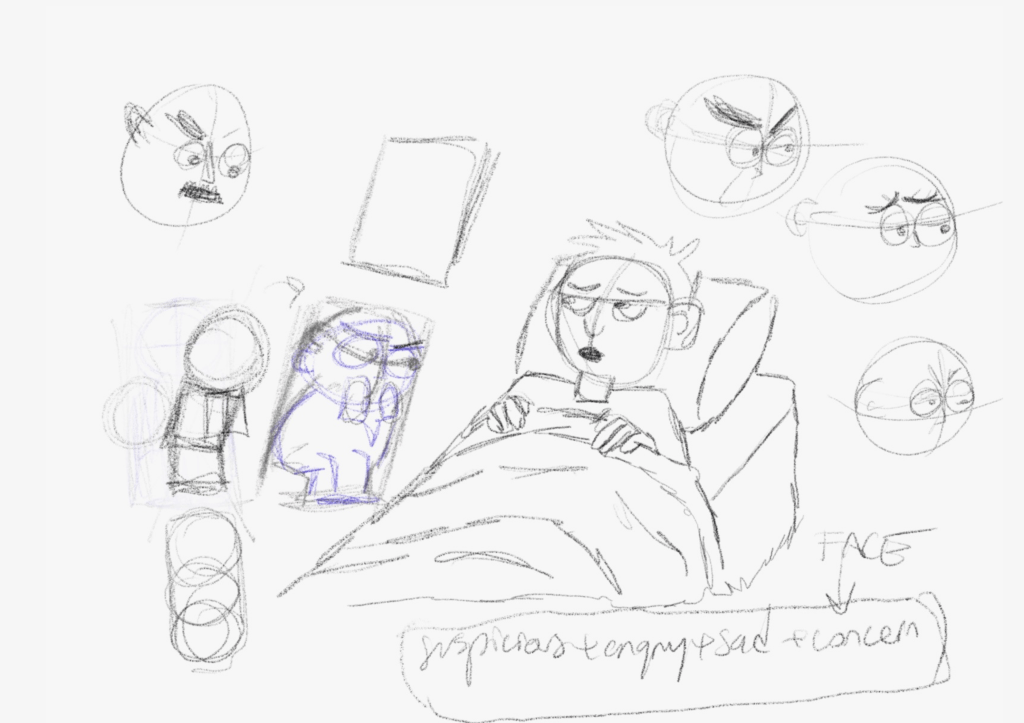
Milo was it. This was exactly how he needed to look. That expression—not quite fear, not quite sadness, not quite anger, but somehow all of them at once. That tense, cramped posture, like he’s physically holding in a thought he’s dying to let out. The way he covers his mouth, as if second-guessing every word. And, of course, the painfully mismatched, borderline offensive outfit. Boom. There he was. And the weirdest part? The second I imagined Milo standing next to me, whispering his signature brand of doomsday nonsense, it suddenly felt… funny. Ridiculous, even. Like, really? A walking embodiment of overthinking had just turned brain’s most dramatic monologues into a sitcom.

That’s when I casually dropped the project into a conversation with my psychologist friend. His reaction? “Psychologically solid and creatively brilliant. Externalizing thoughts to manage them is a legit therapeutic technique. You’re turning it into art—so it’s both a personal discovery and something meaningful for others.” Okay, I was expecting a “Cool idea, bestiee.” Not a TED Talk. But he kept going:
1. Externalization (Narrative Therapy 101): This technique helps people separate themselves from their thoughts. Instead of “I am an overthinker,” you say, “Overthinking is just a character talking to me. That’s not me—it’s just a thought, it suddenly becomes way easier to deal with. 2. Cognitive Behavioral Therapy (CBT): CBT is all about recognizing automatic thoughts, questioning them, and replacing them with healthier ones. Overthinking is built on negative thought loops. Giving it a visual identity—like Milo—helps people step back and go, “Oh, great. Milo’s rambling again. Just that little bit of distance. 3. Emotional Regulation & Metacognition (Thinking About Thinking) Project basically forces people to analyze their thoughts. Is this really me, or is it just Milo being dramatic again? This is huge for managing anxiety, intrusive thoughts, and self-criticism.
So yeah, turns out, without realizing it, I’d built something backed by actual psychological theory. Which is both cool and slightly intimidating. My friend even recommended the books of a psychologist named David D. Burns. As I read through his work, I had a bit of an aha! Most of the negative emotions we feel don’t just come from overthinking aka Milo. They stem from something deeper—cognitive distortions.
👈 Before Milo, there was an entire Council of Chaos I hadn’t even met yet.
*All-or-nothing thinking
*Overgeneralization
*Mental filtering
*Disqualifying the positive
*Mind reading & fortune telling
*Magnification & minimization
*Should statements
*Labeling
*Blame gamer
As I read through these, I could already see them as characters. My brain was practically speedrunning a whole dysfunctional sitcom cast. But—self-awareness moment incoming—I forced myself to not jump ship and start a whole new project. I had to see Milo through. Even though I already knew presenting and sharing the project (aka, my least favorite part) was coming up soon. And sure, the actual worst part—packaging this thing up, presenting it, putting it out into the world—is still looming over me like a passive-aggressive Google Calendar reminder. Maybe that needs its own character.
For now—back to Milo.
I wanted to get to know Milo better. What does he listen to? What does he like? What kind of shows would he binge at 2 AM instead of sleeping like a normal person?
Basically, I had to give him a real identity.
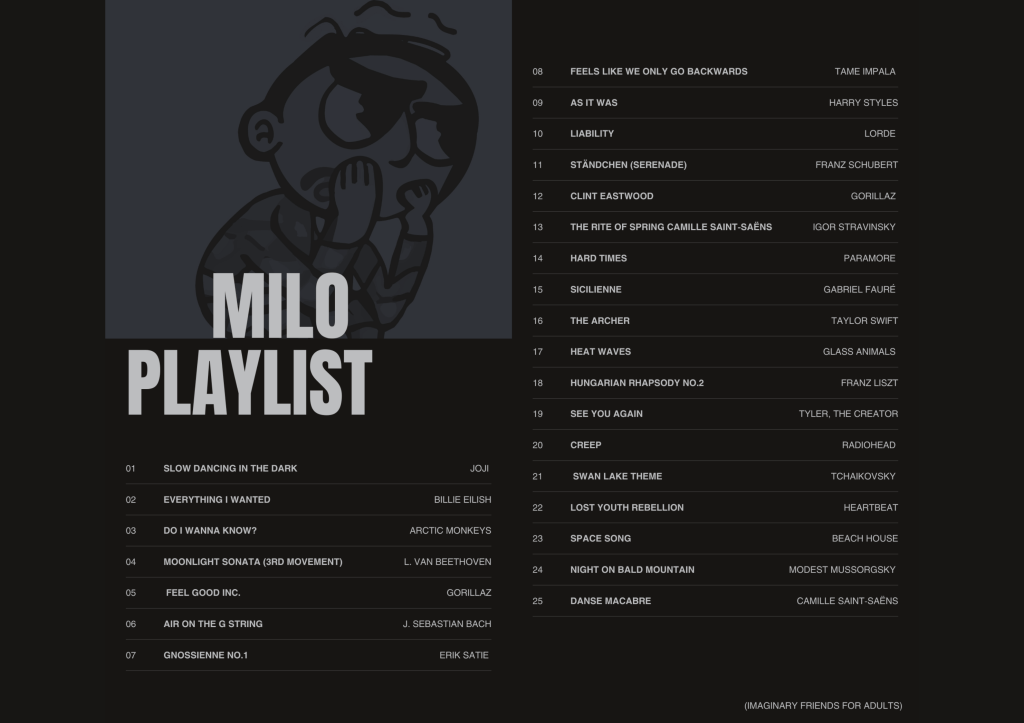
And, of course, just designing him wasn’t enough—I had to bring him into real life. No point in creating a character if he’s not going to haunt people properly. Now, Milo’s there to remind you: “This thought doesn’t belong to me. It belongs to him.” And just like that, with a tiny chuckle, you can take a deep breath, and move on.
Oh, my little ridiculous friend… But here’s the thing—seeing Milo in your space doesn’t just help with overthinking. It gives you this kind of playful power over your thoughts, like you can laugh at them instead of letting them control you. Imagine Milo watching over you every day, in your office, your bag, or even on your favorite hoodie. It’s like having your own personal thought bouncer, always there to make sure you don’t take yourself too seriously.
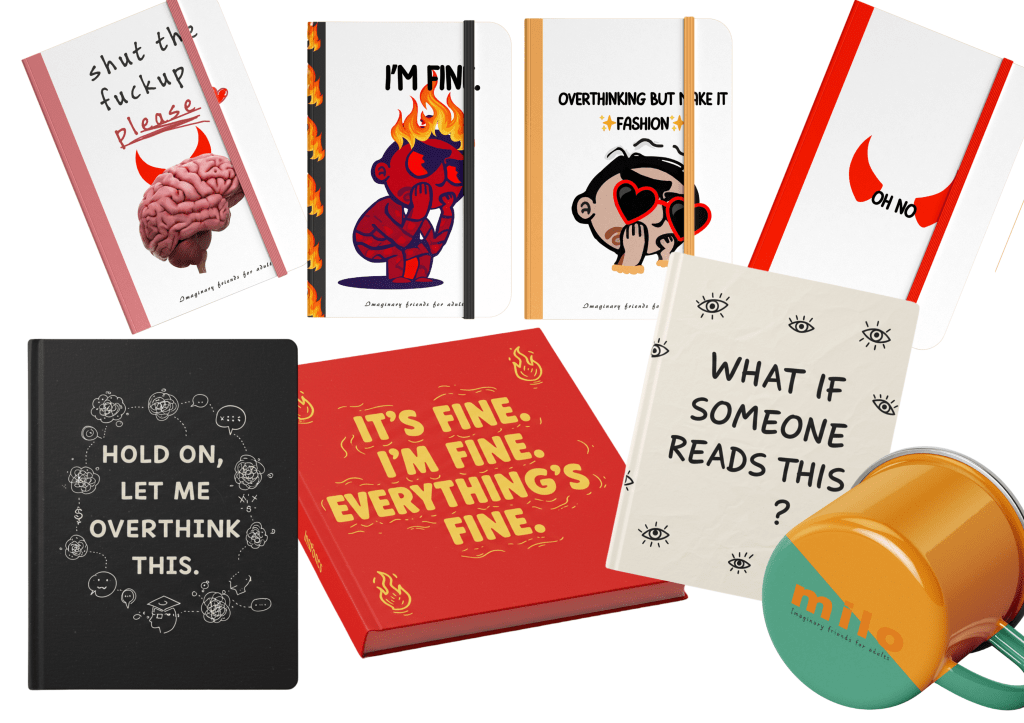
It’s not just stuff—it’s your new mental wellness ritual. Who wouldn’t want a little ridiculous Milo in their life to make overthinking just a little more… bearable?

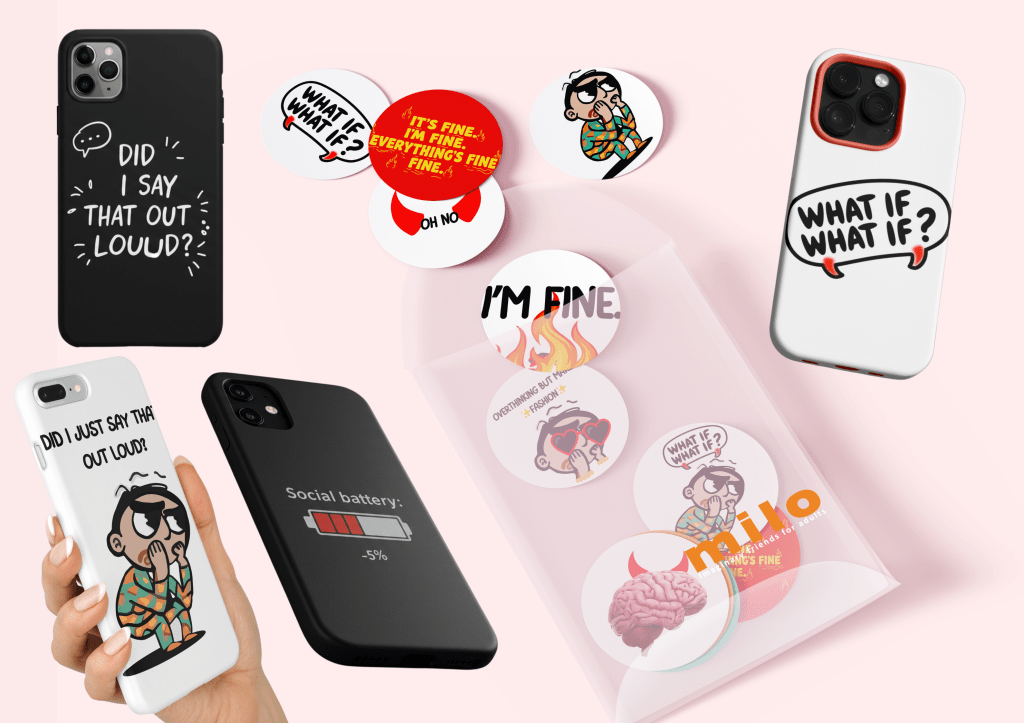
So here we are—the end of this project. And yes, there will be more characters. But I need a break from this guy. Spending so much time with Milo has been… exhausting. His music taste, his aesthetic, his everything is just so dark. Milo, I won’t lie—you were a pain to hang out with. And I definitely don’t want you showing up uninvited at 3 AM ever again. Normally, when I finish a project, I feel a little sad, like I’m saying goodbye to a friend. But you? I won’t miss you. Bye-bye, Milo.
Milo was just the first guest at this chaotic dinner party. And something tells me the next one is already knocking at the door. I can’t wait to meet the next one.
To be continued.
 LODOS
LODOS 